
The Ultimate Guide to Business Setup in Dubai, UAE
Starting a business in a global economic powerhouse is one of the most strategic moves an entrepreneur can make. With its world-class infrastructure, pro-investment policies, and geographic location bridging East and West, the United Arab Emirates offers unparalleled growth opportunities for a successful business setup in Dubai, UAE.
Navigating the legal frameworks, structural options, and licensing requirements can be challenging without clear direction. This comprehensive guide details everything required for a successful business setup in Dubai, UAE, updated to reflect the latest regulatory and tax landscapes.
1. Why Choose Dubai for Your Business Setup?
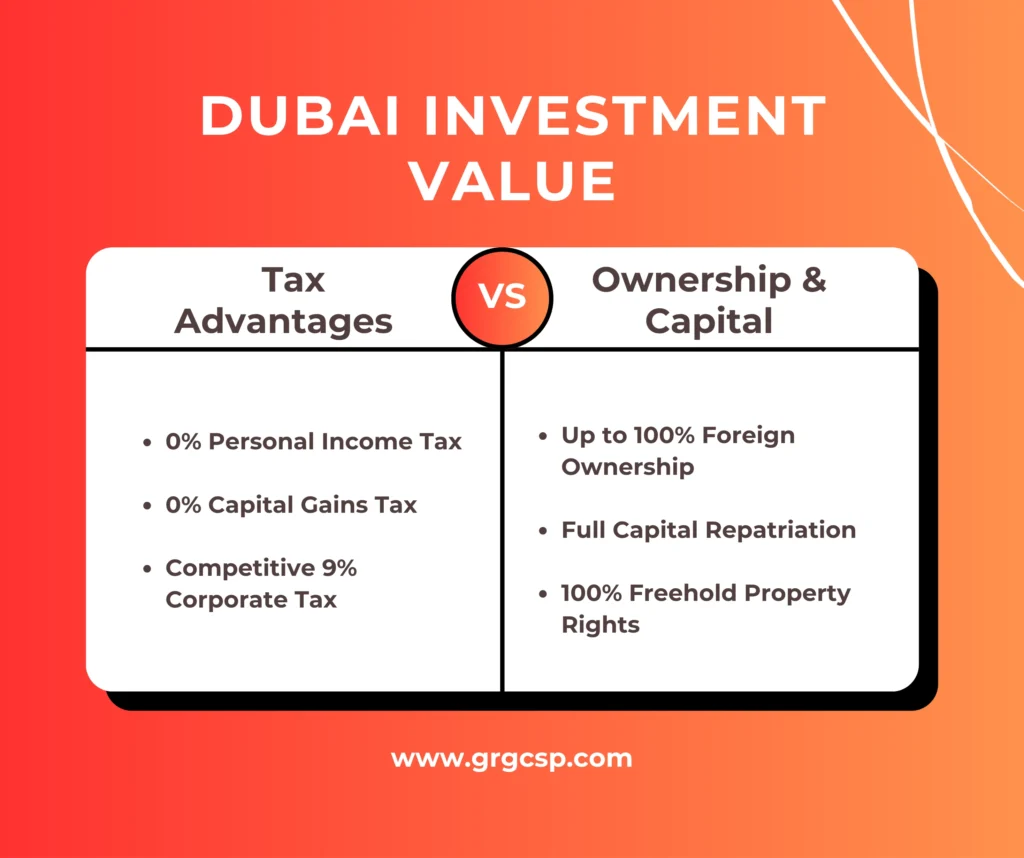
Dubai has transformed from a regional trading hub into a global destination for startups, tech innovators, and multinationals. The city’s business environment is structured specifically to support corporate growth and protect investor capital.
Beyond fiscal benefits, the UAE government actively fosters long-term residency through programs like the Golden Visa, which grants a 10-year residency pathway to significant investors, entrepreneurs, and highly skilled professionals.
2. Step-by-Step Process for Business Setup in Dubai, UAE
Setting up a business requires a precise sequence of administrative approvals. Skipping or misordering these steps can lead to delays or rejected applications.
1.Select Your Jurisdiction:
Decide whether your business goals align best with a Mainland setup or one of Dubai’s specialized Free Zones. This dictates your market access and operational boundaries.
2.Choose a Legal Structure:
Define the legal form of your business. Common structures include a Limited Liability Company (LLC), a Sole Proprietorship, or a Branch of a Foreign Company.
3.Register Your Trade Name:
Submit your proposed company name to the Department of Economy and Tourism (DET) or the respective Free Zone authority. The name must comply with local naming conventions and avoid offensive or reserved words.
4.Secure Initial Approval:
Apply for Initial Approval, which serves as the government’s acknowledgement that your business activity is permitted. This allows you to proceed with office leasing and secondary legal steps.
5.Draft Legal Documents & Lease Office Space:
Draft and sign the Memorandum of Association (MOA). Concurrently, secure a physical office or warehouse space and obtain an Ejari (registered lease contract), which is mandatory for Mainland licenses.
6.Collect Your Trade License:
Submit your final documents, pay the designated licensing fees, and collect your active commercial or professional trade license.
3. Mainland vs. Free Zone: Understanding Jurisdictions
The most critical decision when planning a business setup in Dubai, UAE is choosing between a Mainland entity and a Free Zone jurisdiction. Both structures offer distinct operational advantages depending on your business model.
Mainland Companies (Onshore)
Mainland businesses are licensed by the Department of Economy and Tourism (DET).
Market Reach for Business Setup in Dubai, UAE: A mainland license permits direct trade within the local UAE market and across all emirates without restrictions.
Ownership: Foreign investors can enjoy 100% ownership for most commercial and industrial activities, eliminating the historical requirement for a local Emirati partner to hold 51% of the shares.
Government Contracts: Mainland entities are eligible to bid directly for lucrative government projects and tenders.
Free Zone Companies
Dubai features over 30 specialized Free Zones (e.g., DMCC, Dubai CommerCity, DIFC) tailored to specific sectors like tech, finance, and e-commerce.
Tax & Duty Exemptions: Free Zones offer custom duty exemptions and simplified corporate structures.
Trade Limitations: UAE Free Zone companies cannot trade directly within the mainland UAE market without utilizing a local distributor or agent, though they can trade freely internationally and within their designated zone.
Virtual Packages: Many Free Zones offer “flexi-desk” or virtual office packages, substantially lowering initial setup costs for digital businesses.
4. Types of Trade Licenses in Dubai
Your trade license defines the scope of your allowed business activities. The DET categorizes activities into four primary licensing frameworks:
| License Type | Ideal Target Sectors | Key Advantage |
| Commercial License | General trading, retail, logistics, e-commerce, real estate. | Enables the import, export, and distribution of physical goods. |
| Professional License | Management consulting, IT services, legal advice, design. | Tailored for service providers and specialists based on professional qualifications. |
| Industrial License | Manufacturing, raw material processing, food production. | Required for operations utilizing a physical plant or factory assembly line. |
| Tourism License | Hotels, travel agencies, tour operators, car rentals. | Governed by strict compliance rules to maintain international hospitality standards. |
5. Post-Incorporation Mandates: Visas, Banking, and Corporate Tax
Securing your trade license does not complete the deployment process. To begin full commercial operations, you must navigate three post-incorporation requirements:
Corporate Bank Account Opening
Opening a corporate bank account in the UAE involves strict compliance and Know Your Customer (KYC) protocols. Banks require a valid trade license, a corporate registry profile, proof of address (Ejari), and comprehensive bank statements from the shareholders. Advanced digital solutions and specific corporate service providers can streamline this onboarding path.
Visa Allocations and Immigration
Your trade license determines your corporate visa quota, which dictates how many international employees you can sponsor. As a business owner, you are entitled to an Investor Visa, which can be extended to immediate family members and domestic staff.
Navigating the UAE Tax Framework
While the UAE remains highly tax-favorable, it has introduced structured frameworks to align with global standards:
Value Added Tax (VAT): A standard 5% VAT applies to taxable supplies of goods and services. Registration is mandatory for businesses whose taxable turnover exceeds AED 375,000.
Corporate Tax: A standard corporate tax rate of 9% applies to taxable corporate net profits exceeding AED 375,000. Small business relief and specific Free Zone exemptions are available for qualified entities.
Important QA’s
How much does it cost to start a business in Dubai?
The cost of a business setup in Dubai varies significantly based on jurisdiction and physical space requirements. A basic Free Zone license with a virtual desk ranges from AED 10,000 to AED 25,000. A Mainland company setup typically starts around AED 20,000 to AED 40,000+, depending on the trade activities, office lease costs, and government registration fees.
Can a foreigner own 100% of a company in the UAE?
Yes. Foreign investors can achieve 100% ownership of companies located both within designated Free Zones and on the UAE Mainland. Amendments to the UAE Commercial Companies Law have removed the blanket requirement for a local Emirati citizen to own 51% of a mainland business, opening up full foreign ownership across hundreds of commercial and industrial sectors.
Is an office space mandatory to get a business license in Dubai?
For a Mainland company license, a physical office space verified by an Ejari lease contract is a strict legal requirement. However, if you opt for a Free Zone setup, many jurisdictions provide flexi-desk options, shared co-working spaces, or virtual licenses that satisfy the legal requirement for a registered business address without a physical footprint.
What is the minimum capital required to start an LLC in Dubai?
For most standard business operations in Dubai, there is no strict statutory minimum capital required to establish a Limited Liability Company (LLC). The law states that the capital must be sufficient to achieve the business objectives, and shareholders must state the value of their capital contributions in the company’s Memorandum of Association (MOA).
How long does it take to get a trade license in Dubai?
The timeline depends on the complexity of your business structure and your chosen jurisdiction. Free Zone licenses can often be processed in 2 to 7 working days, particularly for standard consultancy or e-commerce models. Mainland company registration in Dubai generally takes between 1 to 2 weeks, as it requires external government clearances and lease verions.
7. Partnering with a Corporate Service Provider
Attempting to manage the documentation, legal translations, jurisdictional comparisons, and government ministries on your own can lead to unexpected delays and hidden operational costs.
Partnering with an experienced Corporate Service Provider (CSP) ensures your application is processed correctly the first time. A professional consultant handles everything from your initial trade name reservation to corporate bank account allocation and residency visa clearance, allowing you to focus entirely on launching your commercial operations.